Therapy for Children & Teens in Washington, DC
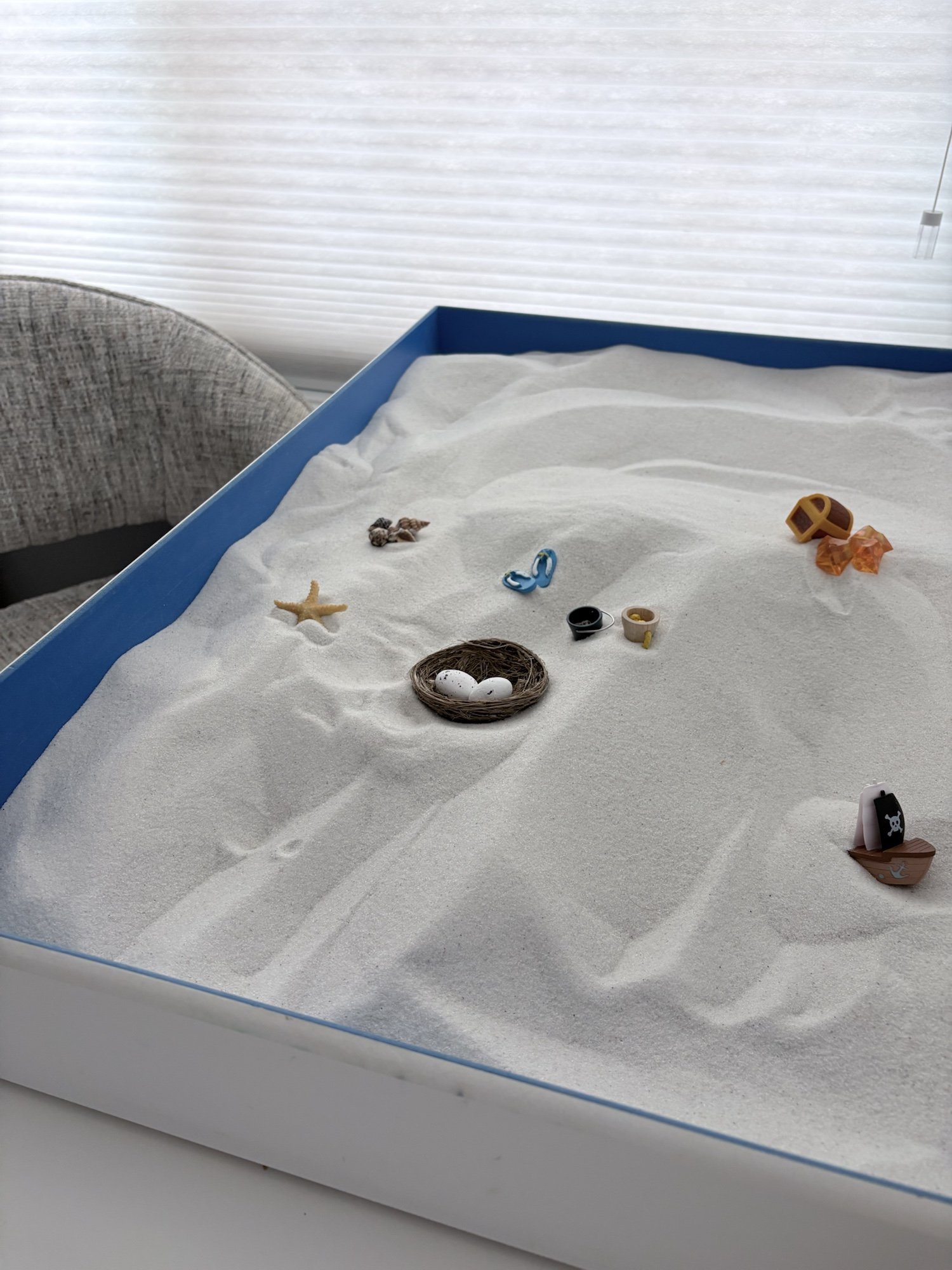
Children and teens don’t always communicate what they’re experiencing through conversation alone. Depending on their age and needs, therapy may include talking, art-making, play, or sand tray.
I work with young people experiencing anxiety, grief and loss, difficult or traumatic experiences, serious or chronic illness, relationship and family difficulties, and significant changes in their lives.
My work is relational and developmentally informed. I pay attention to a young person’s emotional experience and relationships, as well as what emerges through conversation, play, and creative work.
In-person in Northwest DC and virtual options for appropriate clients
Request a consultationWhen something seems different
Sometimes a child or teen can tell you exactly what is wrong. Often, they can’t.
You may notice that your child seems more anxious, withdrawn, irritable, overwhelmed, or unlike themselves. They may be having a difficult time with friends or family, coping with a loss or change, living with illness, or carrying the effects of something frightening or painful.
At other times, there may not be an obvious event. You simply have a sense that your child is struggling and could use a place of their own to work through what they are experiencing.
Therapy does not require a child or teen to arrive able to explain everything in words.
How I work with children and teens
I begin by getting to know the young person in front of me rather than assuming that a particular behavior or symptom means the same thing for every child.
Depending on age and developmental needs, sessions may involve conversation, art-making, play, sand tray, or a combination. These can give children and teens different ways to communicate, explore, and make sense of their experience.
I’m interested in what a young person is feeling and experiencing, the relationships and circumstances around them, and what their behavior may be communicating. The work develops over time as I get to know them and understand what is happening in the larger context of their life.
Art, play, and conversation
For some young people, sitting across from an adult and talking directly about feelings is useful. For others, it isn’t the most natural way to communicate, particularly at first.
Art and play can create additional ways for children and teens to express themselves, experiment, tell stories, explore relationships, and approach experiences that may be difficult to put into words.
There is no expectation that a child be artistic or particularly creative. What matters is the process and what becomes meaningful within the therapy.
Areas I often work with
Anxiety & overwhelm
Worry, fears, emotional overwhelm, difficulty with uncertainty, or feeling chronically on edge.
Grief & loss
Death and bereavement as well as losses connected to relationships, family changes, health, or other significant transitions.
Difficult or traumatic experiences
Experiences that continue to affect a young person’s emotions, relationships, sense of safety, or understanding of themselves.
Serious or chronic illness & medical experiences
Diagnosis, treatment, hospitalization, procedures, changes in the body, medical trauma, uncertainty, survivorship, and the ways illness affects the whole family.
Relationships & family changes
Difficulties with peers or family relationships, changes within the family, and experiences that affect a young person’s sense of connection or belonging.
Identity & growing up
Questions about identity, independence, relationships, belonging, and the changes that come with adolescence and development.
Experience with children, teens, and families
Before entering full-time private practice, I spent nearly a decade working as an art therapist in a pediatric hospital, supporting children, teens, young adults, and families affected by serious illness, treatment, grief and loss, and difficult medical experiences.
That work shaped the way I understand children and adolescents: within the context of their development, relationships, family, body, circumstances, and the ways they communicate beyond words.
I’ve also worked with young people in community and outpatient settings, including children with intellectual and developmental disabilities.
Parents and caregivers are part of the work
Therapy with a child or teen involves finding a balance between giving them a meaningful sense of privacy and keeping parents or caregivers appropriately involved.
The amount and form of caregiver involvement depends on the young person’s age, developmental needs, circumstances, and what is happening in treatment. I may meet with caregivers separately or communicate periodically about broader themes, functioning, and ways to support the work outside of sessions.
I do not routinely give parents a detailed account of everything a child or teen says or does in therapy. Creating some privacy is often important to the therapeutic relationship, while safety concerns and other situations requiring caregiver involvement are handled differently.
Understanding the whole child or teen
My work with children and teens is grounded in curiosity about their emotional and relational lives and the larger context in which difficulties are occurring.
Rather than focusing only on a symptom or behavior, I’m interested in understanding what a child or teen is experiencing, how they make sense of it, and the relationships and circumstances around them. Therapy may also support them in developing greater awareness and more ways of responding to difficult feelings, relationships, and experiences.
Therapy during the school day
For some teens, virtual sessions during the school day can make therapy easier to fit into an already full week. It can reduce the need to add another appointment after school and make it easier to maintain a consistent therapy schedule.
School-day sessions aren’t appropriate for every teen. They need sufficient privacy and a setting where they can participate comfortably, and the arrangement needs to make sense clinically and developmentally. When those pieces are in place, I’m happy to consider whether daytime telehealth could be a good option.
Practical information
In person
Sessions are available in Northwest Washington, DC, near Tenleytown.
Virtual
Telehealth is available for appropriate clients, including the possibility of school-day sessions for some teens when adequate privacy can be arranged.
Sessions
Individual sessions are 45 minutes.
Fee
The fee for individual sessions is $225.
Insurance
Aligned Art Therapy is an out-of-network practice. I can provide documentation for families who wish to seek reimbursement through their insurance plan. Coverage and reimbursement vary by plan and provider eligibility.
Considering therapy for your child or teen?
You don’t need to know exactly what is happening, or what kind of therapy your child needs, before reaching out.
You can request a brief consultation to tell me a little about what you’ve been noticing, what you’re looking for, and whether working together might be a good fit.
Request a consultation